

The Artemis II splashdown marks a major milestone in modern space exploration. It shows how far human spaceflight has advanced in recent years. Moreover, it brings humans back near the Moon after more than 50 years. This mission not only tested new systems but also proved that deep space travel is possible again.
NASA successfully completed the mission with a precise ocean landing. As a result, the world witnessed a historic moment in science and technology.
What Is the Artemis II Mission?
The Artemis II mission is NASA’s first crewed lunar mission since 1972. It plays a key role in the Artemis program. Moreover, it aims to prepare humans for future Moon landings and Mars missions.
The spacecraft used for this mission is Orion. It launched on the Space Launch System (SLS) rocket. Additionally, the mission lasted around 10 days and followed a lunar flyby path.
Unlike earlier missions, Artemis II focused on testing systems with astronauts onboard. Therefore, it checked life support, navigation, and safety systems in deep space.
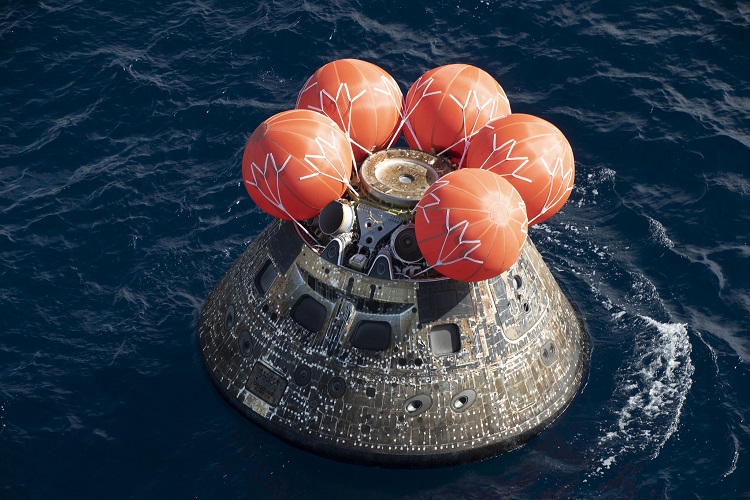
Artemis II Splashdown: A Perfect Return
The Artemis II splashdown happened in the Pacific Ocean after a high-speed re-entry. The spacecraft entered Earth’s atmosphere at over 24,000 mph. However, it safely slowed down using parachutes before landing.
NASA described the landing as a “perfect bullseye.” Moreover, recovery teams quickly reached the capsule. After that, astronauts were taken for medical checks.
This successful return proves that Orion is ready for future missions. Therefore, it builds confidence for upcoming lunar landings.
Meet the Artemis II Astronauts
Four astronauts took part in this historic journey:
- Reid Wiseman (Commander)
- Victor Glover (Pilot)
- Christina Koch (Mission Specialist)
- Jeremy Hansen (Mission Specialist)
This crew represents diversity and global cooperation. For example, Koch became the first woman to travel this far toward the Moon. Also, Hansen became the first non-American on such a mission.
Their journey inspires a new generation of space explorers.
Mission Timeline: From Launch to Splashdown
Launch Phase
The mission launched in early April 2026. Soon after, the crew entered Earth orbit.
Journey to the Moon
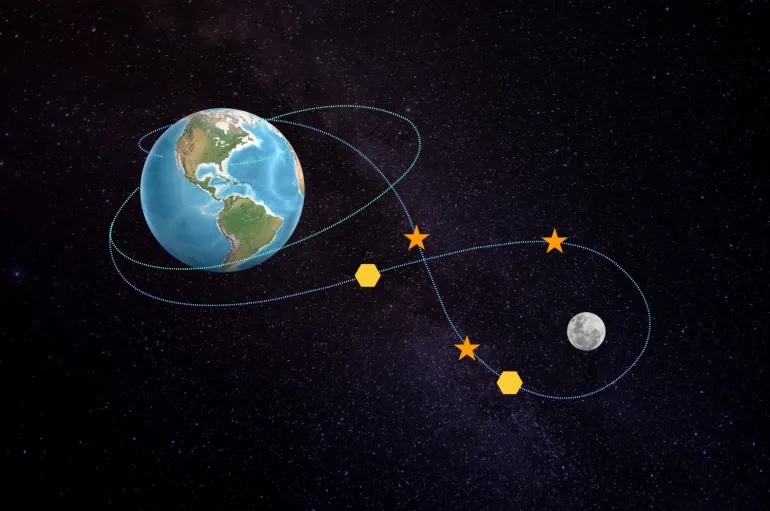
The spacecraft traveled toward the Moon using a free-return trajectory. This path ensures a safe return even without major engine burns.
Lunar Flyby
The crew performed a close flyby of the Moon. During this phase, they captured stunning images and conducted tests.
Return Journey
After orbiting the Moon, the spacecraft began its journey back to Earth.
Final Splashdown
Finally, the Artemis II splashdown completed the mission successfully on April 10–11, 2026.
Why the Artemis II Splashdown Matters
The Artemis II splashdown is more than just a landing. It represents a turning point in space exploration.
First, it proves that humans can safely travel beyond low Earth orbit again. Second, it validates new technologies like Orion’s heat shield. Third, it prepares NASA for future Moon missions.
Additionally, the mission sets the stage for Artemis III. That mission aims to land astronauts on the Moon.
Technology behind the Mission
NASA used advanced technology to ensure mission success.
Orion Spacecraft
Orion carried astronauts safely through deep space. It includes life support and navigation systems.
Heat Shield
The heat shield protected the spacecraft during re-entry. Temperatures reached extreme levels. However, the system worked perfectly.
Navigation Systems
Precise navigation allowed the spacecraft to land within a small target zone.
Because of these technologies, the Artemis II splashdown was highly accurate.
Challenges Faced During the Artemis II Mission
Even though the mission was successful, it faced challenges.
- Communication blackout during re-entry
- Extreme heat during atmospheric entry
- Long-distance travel beyond Earth
However, NASA handled these challenges effectively. Therefore, the mission proved reliable under pressure.
Global Impact of Artemis II
The success of the Artemis II splashdown has global importance.
First, it renews interest in space exploration. Second, it strengthens international partnerships. Third, it encourages innovation in science and technology.
Moreover, countries around the world are now focusing more on lunar missions.
What Comes Next After Artemis II?
NASA is already planning future missions.
Artemis III
This mission aims to land humans on the Moon. It will likely happen in the coming years.
Artemis IV and Beyond
Future missions will build a long-term presence on the Moon.
Eventually, these missions will help humans reach Mars.
Future of Human Space Exploration
The Artemis II splashdown opens a new chapter in space exploration.
Soon, humans may live and work on the Moon. Also, new technologies will make space travel safer.
In addition, private companies and global agencies will play a major role. Therefore, the future of space exploration looks promising.
The Artemis II splashdown is a historic achievement. It shows that human space exploration is entering a new era. Moreover, it proves that NASA is ready for more ambitious missions.
This mission connects past achievements with future goals. As a result, it brings humanity one step closer to living beyond Earth.
Reference Source:
This article references insights reported in:
For More News Click the Links Below:
Kilauea Volcano Eruption: What Visitors Need to Know
5 Country Retreats for Spring You Must Visit